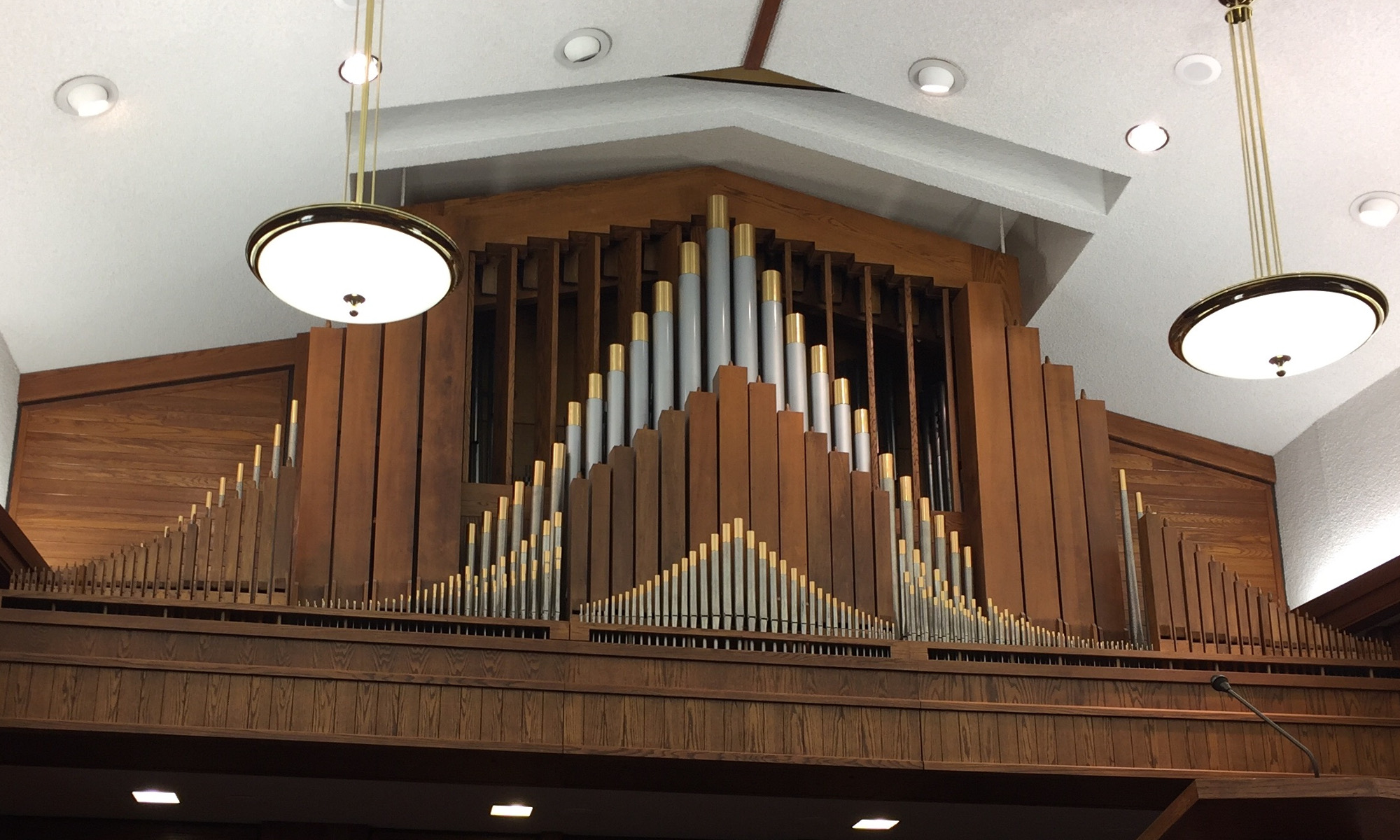
Many readers have asked about my practice organ, where I labor every day in hopes of avoiding terrible mistakes on Sunday. For the last couple years, music had been a huge distraction from my writing, so it’s reasonable to assume I have a seriously impressive practice organ enticing me away from my word processor.
Do I practice in an ancient cathedral with vaulted ceilings, sitting at a six-manual console with rows upon rows of stops to select from the thousands of ranks of pipes that compose this massive and majestic musical instrument?
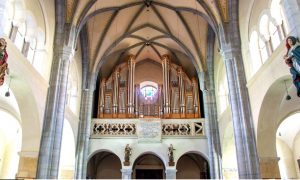
Okay, so I don’t actually have any readers. But if I did, this question would be at the top of their list.
Brief background info: My piano teacher dropped me as a student because I wasn’t practicing. A couple of decades later, I started teaching myself to play – using the Gulbrandsen upright piano in our living room.
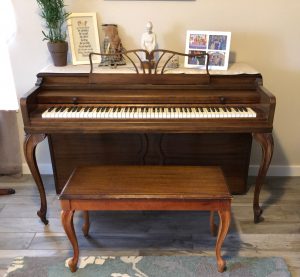
I’m a prodigy, right? As soon as my fingers touched the ivory keys, beautiful music soared through the house.
Not exactly.
One evening my wife came downstairs and pleaded, “Can you please stop? You’re really stressing me out.”
My youngest son objected without words. Twice. He simply closed the lid on the piano and walked away.
So I bought a Casio CTK-3500 61-key Keyboard.
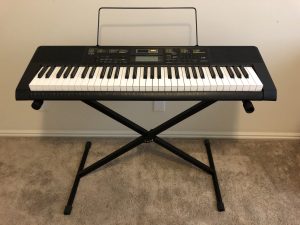
With Samson HP30 headphones!
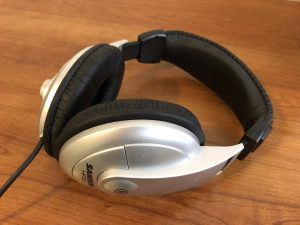
The headphones were a real game changer. Now I could practice for hours on end without annoying anyone in the house.
For a long time, this setup worked really well. What changed?
I started playing organ pedals.
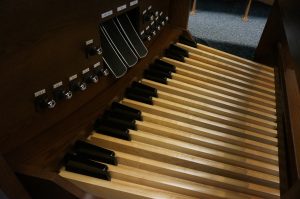
Driving to the church every day to practice really puts a damper on things.
After watching the KSL Classifieds for a few months, I finally gave up on finding an organ console with a full 32 AGO (American Guild of Organists) pedalboard. Putting an organ in our family room was out of the question, so my only option was a basement room.
A traditional wooden console would have been too wide. I could have temporarily removed a couple door frames (not just the doors,) but the deal breaker was the sharp turn at the top of the stairs. I didn’t want to temporarily remove walls.
Eventually I found a keeper: a Yamaha Electone HX-3.
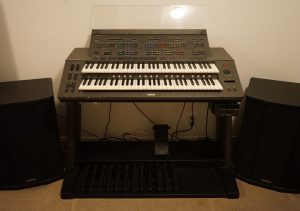
Its key features are dual manuals, MIDI in/out, a headphone jack, and a modular design that helped get it through the door.
The stubby toe pedals that came with it were too short for real pedal practicing, so I bought a 27-note pedalboard from PedaMidiKit in Italy.
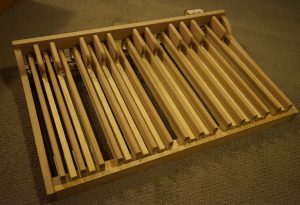
It’s flat and straight instead of concave and radiating, which means I identify as European when I practice at home. It takes only a little adjustment when I get back on the full 32-note AGO pedalboard at the church.
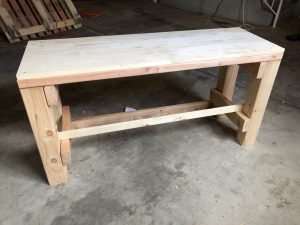
The padded, adjustable bench that came with the Electone did not work with my new pedalboard, so I built my own. It’s heavy and a bear to move, but – and this is key – it’s wide enough to fit over the pedalboard.
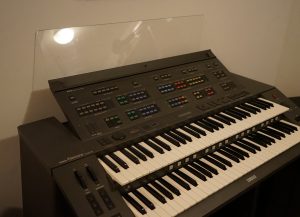
The music stand on the Electone HX-3 is set back quite a ways.
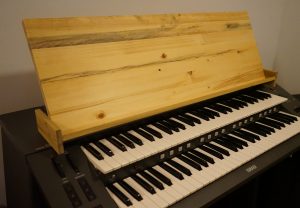
To get my music to where I can focus on it with my over-50 eyes, I built my own.
When you put it all together, it’s a strange mixture of wood and modern plastic.
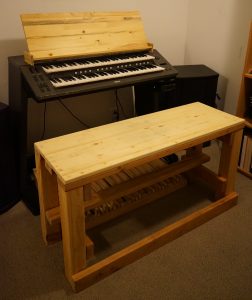
So that’s my practice organ. No cathedral? Well . . .
Piotr Grabowski recorded, individually, each and every pipe in the organ at the St. Bartholomäus church in Friesach, Austria. The MIDI port on my Electone HX connects to GrandOrgue, virtual organ software running on my laptop, which recreates (over Apple EarPods) the Friesach organ in my very own basement!
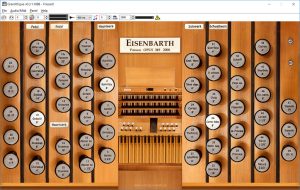
So, yes, I practice every day in a cathedral with vaulted ceilings.
You must be logged in to post a comment.